
How to Mix Reggaeton Into an Afrobeats Set Without Killing the Groove
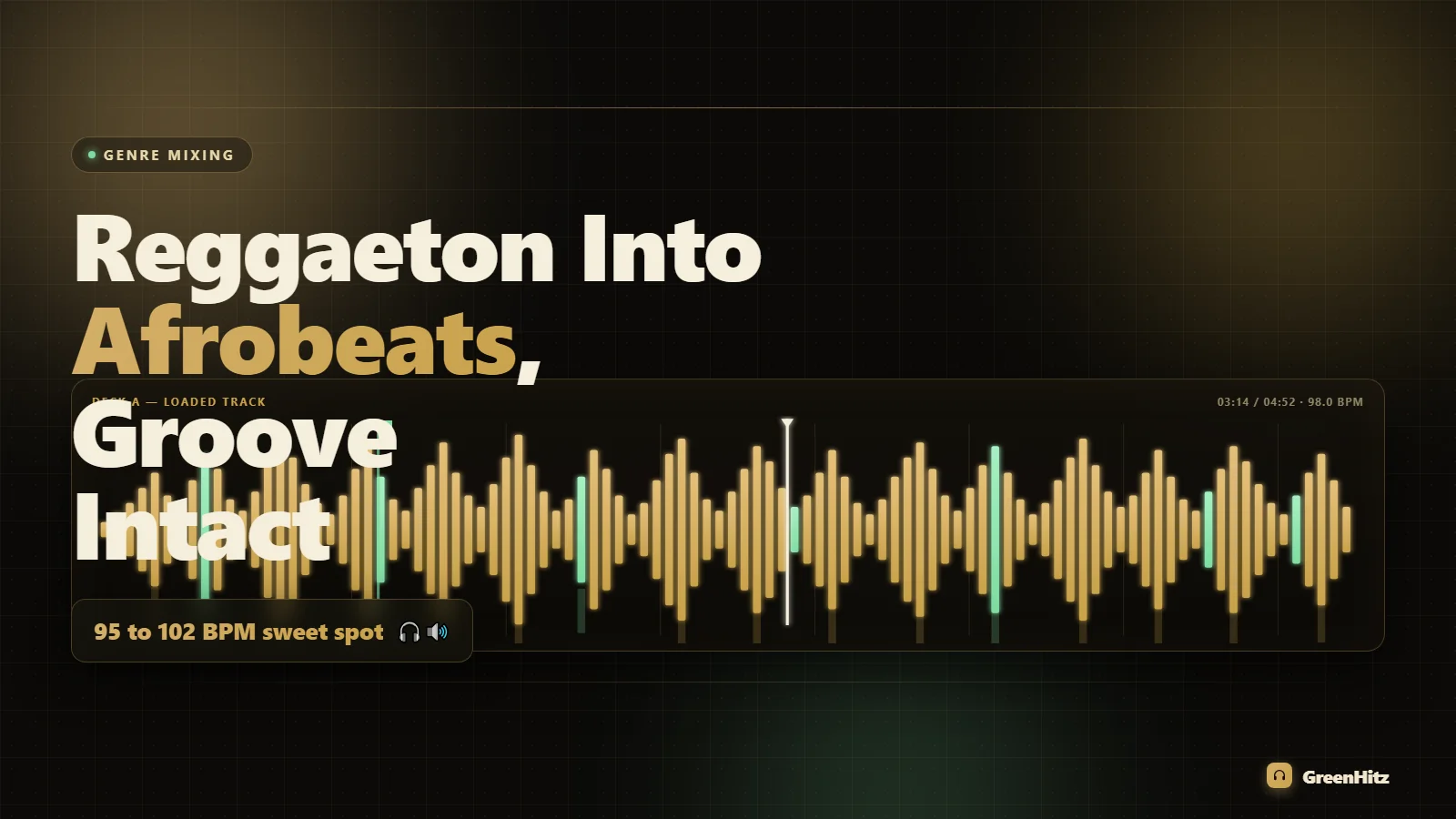
To mix reggaeton into an afrobeats set, ride the shared 95 to 105 BPM pocket, use afrobeats tracks with a swung, off-kilter kick as your bridge, and drop the reggaeton on a fresh 8 or 16 bar phrase so the dembow lands clean. Keep the transition short (a quick swap on the one) rather than a long blend, because the two rhythm patterns clash if you overlap them for too long. Match keys where you can, but energy and phrasing matter more than perfect harmonics here.
Both genres live off the hips, not the chest. That is the whole trick. Afrobeats leans on a rolling, syncopated groove with a soft kick and busy percussion. Reggaeton is built on the dembow: that boom-ch-boom-chick pattern that never lets up. Play them right and the crowd never feels the seam. Play them wrong and you flatten the room in one bar. Here is how to keep the groove alive.
Know the BPM Overlap Between Reggaeton and Afrobeats
The good news is these genres already breathe in the same tempo neighborhood. That overlap is your runway.
| Genre | Typical BPM | Rhythm signature |
|---|---|---|
| Afrobeats | 100 to 115 | Rolling syncopated groove, soft kick, busy shaker/log drum |
| Afro-fusion / slower afrobeats | 95 to 102 | Laid back, sparse, sing-along heavy |
| Reggaeton | 88 to 100 | Dembow, steady snare on the offbeat |
| Reggaeton (modern / trap-tinged) | 90 to 96 | Half-time feel, heavy 808 sub |
The sweet spot where they meet is roughly 95 to 102 BPM. If your afrobeats track is sitting at 108, that is a big jump down to a 92 BPM reggaeton cut, and pitching either one that far will make vocals sound off. So plan your route: work your afrobeats energy down toward the low 100s before you make the switch, then the reggaeton slots in with only a small tempo nudge.
If you do need to bridge a bigger gap, treat it like any cross-genre move. I broke the full toolkit down in this guide on transitioning between different BPM genres without killing the floor, and the same rules apply: use a percussive break, a vocal moment, or an echo tail to buy yourself the tempo change.
Why the Dembow and the Afrobeats Groove Fight (and How to Fix It)
This is the part most DJs get wrong. It is not a tempo problem. It is a rhythm problem.
Afrobeats swings. The kick and percussion sit slightly off the grid, giving that loose, human bounce. Reggaeton's dembow is rigid and relentless: the snare hits the same offbeat every single bar. When you overlap a long blend, the swung afrobeats groove and the locked dembow pull against each other. Your ears hear two different feels arguing, and the floor senses it even if they cannot name it.
The fix is simple: do not marry the two grooves for long. Overlap the tails, not the cores. A few ways to do it clean:
- Swap on the phrase. Let the afrobeats track ride to the end of a 16 bar section, cut the low end out of it, and bring the reggaeton in on the downbeat of the next phrase. Short overlap, no rhythm war.
- Use a percussion-only bridge. Afrobeats intros and outros often strip down to shaker and log drum. Blend that sparse percussion under the incoming dembow. Percussion plays nice with everything.
- Bridge with an afro-reggaeton hybrid. Plenty of tracks already sit between the two (think afrobeats records with a dembow bounce). Drop one of those as your stepping stone and the crossover feels inevitable instead of forced.
The same logic that makes an amapiano into house transition work applies here: you are matching feel and phrasing first, tempo second.
Match Keys So the Vocals Do Not Clash
Both genres are vocal-heavy, and both love big sing-along hooks. That means clashing keys will bite you hard if you overlap two vocals or ride a long blend. Get your library tagged with Camelot keys and stick to compatible moves: same key, one step around the wheel, or the relative major/minor swap.
If you are new to harmonic mixing, start with mixing harmonically using the Camelot Wheel, then use the energy-routing ideas in building an energy boosting set with the Camelot Wheel to plan where the reggaeton drop lands. For a fast, dembow-driven swap you can get away with a quick cut even if keys are a semitone off, because the overlap is tiny. But the moment you try to layer an afrobeats hook over a reggaeton instrumental, the keys have to line up or the whole thing sours.
Build the Transition Step by Step
Here is the workflow I run on CDJs or a controller when I am walking an afrobeats room into reggaeton.
- Cue the reggaeton track at a clean downbeat. Set a hot cue right on the first kick of a strong section, ideally the drop or a verse with the dembow already rolling.
- Bring your afrobeats tempo into range. Nudge it toward the low 100s across a couple of tracks so you are not slamming a big pitch change in one move.
- Ride the afrobeats track to a phrase boundary. Let a 16 bar section finish. Pull the bass out with your EQ in the last 4 bars.
- Fire the reggaeton in on the one. Bring it in full on the downbeat with the low end already handed over. The dembow should be the first thing the crowd hears clearly.
- Cut the outgoing track fast. Do not let the swung afrobeats groove linger under the dembow. A 2 to 4 bar overlap is plenty.
If you want the outgoing afrobeats track to disappear with a little more polish, an echo out transition is perfect here. Throw the echo on the last vocal, kill the fader, and the reggaeton walks straight into the space the delay leaves behind. Getting your beatgrids right first makes all of this painless, so tighten up your waveform alignment on CDJs before you start experimenting.
Use Clean Edits and Intro Versions to Make the Swap Seamless
Radio-clean intros and DJ edits with extended, beat-only openings are gold for cross-genre work. A reggaeton edit that opens on eight bars of pure dembow gives you a percussion runway to blend under the tail of the afrobeats track. Same in reverse: an afrobeats edit with a stripped intro lets you exit reggaeton without a vocal collision.
This is where pulling DJ-ready versions from a pool like GreenHitz saves your set. Instead of hunting for a usable intro, you grab an edit that is already structured for mixing. If you are unclear on what you are actually pulling, this breakdown of the difference between a DJ edit and a remix is worth a read, and here is the case for why clean edits and intro versions are better for DJ sets. Tag them by energy while you prep so you can find the right bridge track mid-set without breaking stride, which is exactly the payoff of a solid energy-level record pool workflow.
Read the Room Before You Pull the Trigger
Technically clean means nothing if the timing is wrong. Afrobeats crowds are dancing in a rolling, hips-and-shoulders groove. Reggaeton flips that to a grinding, lower, close-partner energy. That is not a downgrade, it is a mood change, and you want to serve it when the floor is ready for it, usually deeper into the peak when people are locked in.
Drop it too early in a warm-up and you can stall the build. If you are still learning to time these mood shifts, my notes on reading a dance floor and when to drop different genres lay out the cues to watch. And if you run open-format nights, the crossover thinking in open-format DJing across hip-hop, house and afrobeats pairs directly with everything above.
Frequently Asked Questions
What BPM should I set to blend reggaeton and afrobeats?
Aim for the 95 to 102 BPM overlap where both genres feel natural. Work your afrobeats tempo down into the low 100s first, then bring reggaeton in with a small pitch nudge. Avoid pitching either track more than about 4 percent, because the vocals start to sound unnatural beyond that.
Can I beatmatch reggaeton and afrobeats or should I just cut?
You can beatmatch the tempo easily since they are close, but do not ride a long blend. The swung afrobeats groove fights the rigid dembow. Sync the grids, then swap on a phrase boundary with a short 2 to 4 bar overlap so the two rhythm patterns never argue for long.
Do reggaeton and afrobeats need to be in the same key?
For a quick cut, close is fine because the overlap is tiny. For any longer blend or vocal layering, match keys using the Camelot Wheel: same key, one step around, or the relative major/minor. Clashing keys are most obvious when two big hooks overlap.
What tracks work best as a bridge between the two genres?
Afro-reggaeton hybrids and afrobeats records with a dembow bounce are ideal stepping stones. Percussion-heavy intros and beat-only DJ edits also work because sparse percussion blends cleanly with either groove. Pull versions with extended intros so you have room to transition.
Where in my set should I introduce reggaeton?
Bring it in once the floor is locked in, usually mid to late peak. Reggaeton shifts the energy from a rolling afrobeats bounce to a lower, grinding feel. Drop it too early in a warm-up and you risk stalling the build before the room is ready for that mood.
How do I transition back to afrobeats after a reggaeton run?
Use a stripped afrobeats intro or an edit with a beat-only opening, and swap on the phrase again. An echo out on the last reggaeton vocal leaves clean space for the afrobeats groove to enter. Lift the tempo back up gradually across the next track or two.


