

DJ Pool vs Streaming: What Working DJs Need
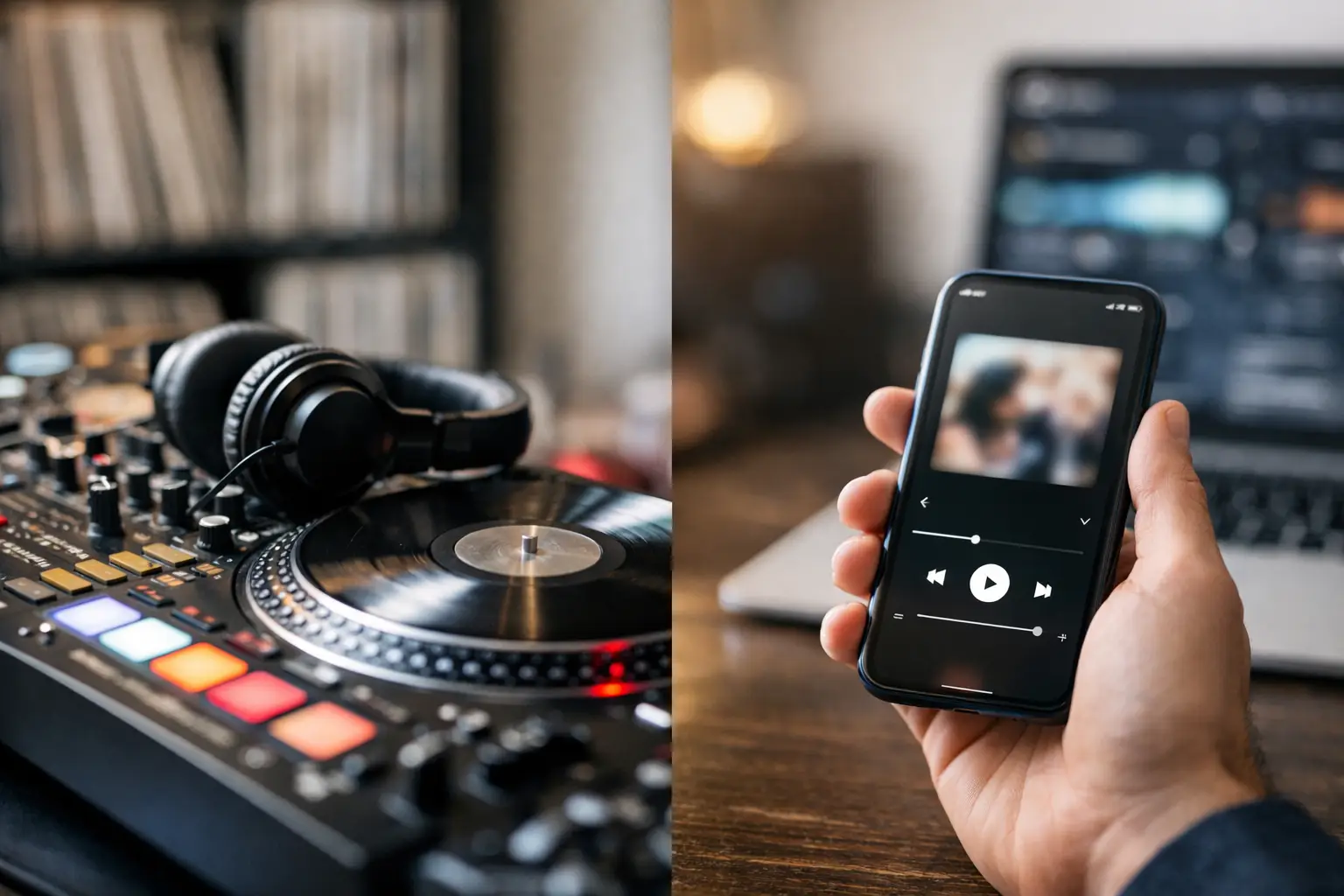
A packed room does not care whether you found the record through an algorithm, a promo email, or a crate dig at 2 a.m. It cares whether the next track lands. That is why the DJ pool vs streaming question is not really about choosing one music source over another. It is about whether your music workflow gives you reliable, playable files when the set is on the line.
Streaming changed how DJs discover music and manage enormous catalogs. DJ pools remain built around a different job: getting working DJs organized, performance-ready versions of new music before they need to play it. For artists and labels, the gap matters too. A stream can be passive exposure. A download, rating, and piece of DJ feedback can show whether a release is reaching people who will actually put it in front of a crowd.
DJ Pool vs Streaming: The Real Difference
Streaming services are designed first for listening. Their strength is breadth. You can search a massive catalog, follow playlists, revisit old favorites, and test a track quickly. For casual listening, prep inspiration, and last-minute requests, that access is hard to beat.
A DJ pool is designed for performance and promotion. The focus is not simply having a song available. It is having the right version of that song, delivered as a downloadable file with usable metadata, so it can be analyzed, tagged, cued, edited, backed up, and played without depending on a venue connection.
That difference shows up the second a DJ starts preparing a set. A streaming catalog may have the original radio version. A pool is more likely to offer a clean edit, dirty version, intro edit, extended mix, acapella, or club-ready remix. Those options are not extras for open-format, radio, and mobile DJs. They are the practical tools that let a DJ control energy, language, transitions, and timing.
For artists, the distinction is equally direct. Streaming places a release inside a consumer-facing library alongside millions of other records. DJ promotion puts the release in a workflow where selectors are actively looking for new material to play out. Neither outcome replaces the other, but they solve different problems.
Why Downloadable Files Still Matter in a Live Set
A stable internet connection is never guaranteed. Hotel ballrooms, basements, outdoor events, clubs with overloaded Wi-Fi, and venues with weak cellular service all expose the risk of treating streaming as your only music library. Even where streaming works, loading time and catalog changes can create unnecessary friction.
Downloaded files give DJs control. You can set beat grids, create hot cues, build loops, add custom tags, and prepare crates before doors open. You can also keep multiple backups on a laptop, external drive, or USB. If a track is central to a set, relying on an account login and a live connection is a weak plan.
File quality matters as well. Working DJs need consistent, high-quality audio that holds up through a club system, a clean PA, or a broadcast chain. A properly sourced download also stays in your library. Licensing terms and platform catalogs can change, while a prepared local file remains available for the gigs you built it for.
This does not mean every DJ needs to abandon streaming. It means streaming should be treated honestly: it is a useful layer in a broader workflow, not always the foundation of one.
Track Versions Are the Difference Between Playing and Skipping
The biggest advantage of a strong DJ pool is often version control. A great record can still be unusable in a particular room if the intro is too short, the vocal is too explicit, the arrangement does not mix cleanly, or the energy needs more runway.
An intro version gives a DJ drums and structure to mix from. An extended version creates space for phrasing and blends. A clean edit protects a corporate booking, wedding dance floor, daytime event, or radio slot. An acapella can become the tool that saves a transition or creates a signature mashup moment.
Streaming platforms increasingly include remixes and alternate releases, but they are not organized around this performance logic. Search results can be crowded with unofficial uploads, duplicate titles, edits that are not clearly labeled, or versions that disappear from a catalog. When you are building crates for several gigs in a week, that creates more digging and more uncertainty.
DJ pools are meant to reduce that drag. Tracks are commonly presented with practical information such as BPM, key, genre, and version labels. That makes it easier to find a house tool at 124 BPM, a clean hip-hop record for a mixed-age crowd, or a Latin crossover track that can move from an open-format set into a more focused lane.
Discovery: Algorithms vs DJ Curation
Streaming is excellent at surfacing music based on listening habits. If you spend time with melodic techno, regional Mexican, drill, or Afro house, recommendations can reveal artists and tracks you might have missed. That is valuable research.
The limitation is that a listener algorithm is not the same as DJ curation. It does not always understand why a working DJ needs a track: the record may be gaining local traction, filling a tempo gap, fitting a specific demographic, or arriving with a useful intro edit. A track with modest consumer streams can still be a powerful record for a regional scene, a radio mixshow, or a peak-time room.
Pool discovery is more intentional. DJs can browse new arrivals and genres in a setting built around playable music, while artists and labels can place releases in front of selectors who are already there to find records. That direct context is why promotional placement can matter more than broad visibility that never reaches a DJ’s crate.
GreenHitz supports that exchange by pairing crate-ready music access with DJ-facing promotion, downloads, ratings, likes, and feedback. For a release team, those actions are more useful than vague awareness. They show whether DJs are engaging with the record and help identify where support may be building.
The Artist and Label Side of the Decision
If you are releasing music, streaming is necessary for audience access. Fans expect to find your catalog on the services they already use. But a streaming release alone does not create a DJ record.
To earn play support, a record needs to reach people who can test it in rooms, on radio, in mixes, and across local scenes. That requires a promotion path built around DJs rather than passive listeners. The release should be easy to identify, correctly labeled, available in relevant versions, and presented to selectors in the genres where it belongs.
A dance producer may need an extended mix and clean metadata. A hip-hop artist may need clean, dirty, and intro versions. A Latin or crossover release may benefit from edits that help it fit open-format sets. Giving DJs only one consumer version limits how often they can use the record.
Feedback also changes the value of promotion. A download tells you that a DJ wanted the file. A rating or comment can indicate whether the track has set potential, needs a different edit, or connects with a specific market. That kind of response helps labels make better follow-up decisions instead of treating a campaign as a one-time upload.
When Streaming Is the Better Tool
Streaming wins when scale and speed matter more than file ownership. It is useful for researching a client’s request list, checking a newly released track, discovering catalog cuts, or handling a rare request that is unlikely to become part of your regular rotation.
It can also be the right answer for DJs who play low-stakes environments with dependable internet and a setup designed around approved streaming integrations. A bar DJ with strong venue Wi-Fi and a flexible playlist may get real value from a streaming-first approach.
The trade-off is preparedness. If your work depends on precision, multiple set environments, professional edits, and the ability to perform regardless of connection quality, streaming alone leaves too much outside your control.
Build a Workflow That Covers Both
The practical answer for most working DJs is not either-or. Use streaming to explore, reference, and respond to the widest possible catalog. Use a DJ pool to acquire the tracks, edits, and versions that deserve a permanent place in your crates.
Start by separating discovery from performance. When you hear a track worth testing, find the DJ-ready version if one exists. Download it, verify the metadata, set your cues, and place it in the right crate for the rooms you play. Keep your essential music local, backed up, and organized by genre, energy, event type, or set moment.
Artists and labels can use the same principle. Streaming should serve fans and long-term catalog growth. DJ promotion should serve record activation: getting music into the hands of selectors with a reason and a format they can use.
The next time you prep for a set or campaign, ask one simple question: will this record still work when the connection drops, the crowd shifts, and you need the right version immediately? Build around the sources that let you answer yes.


