

How to Structure a Two Hour Warm Up Set Without Peaking Too Early
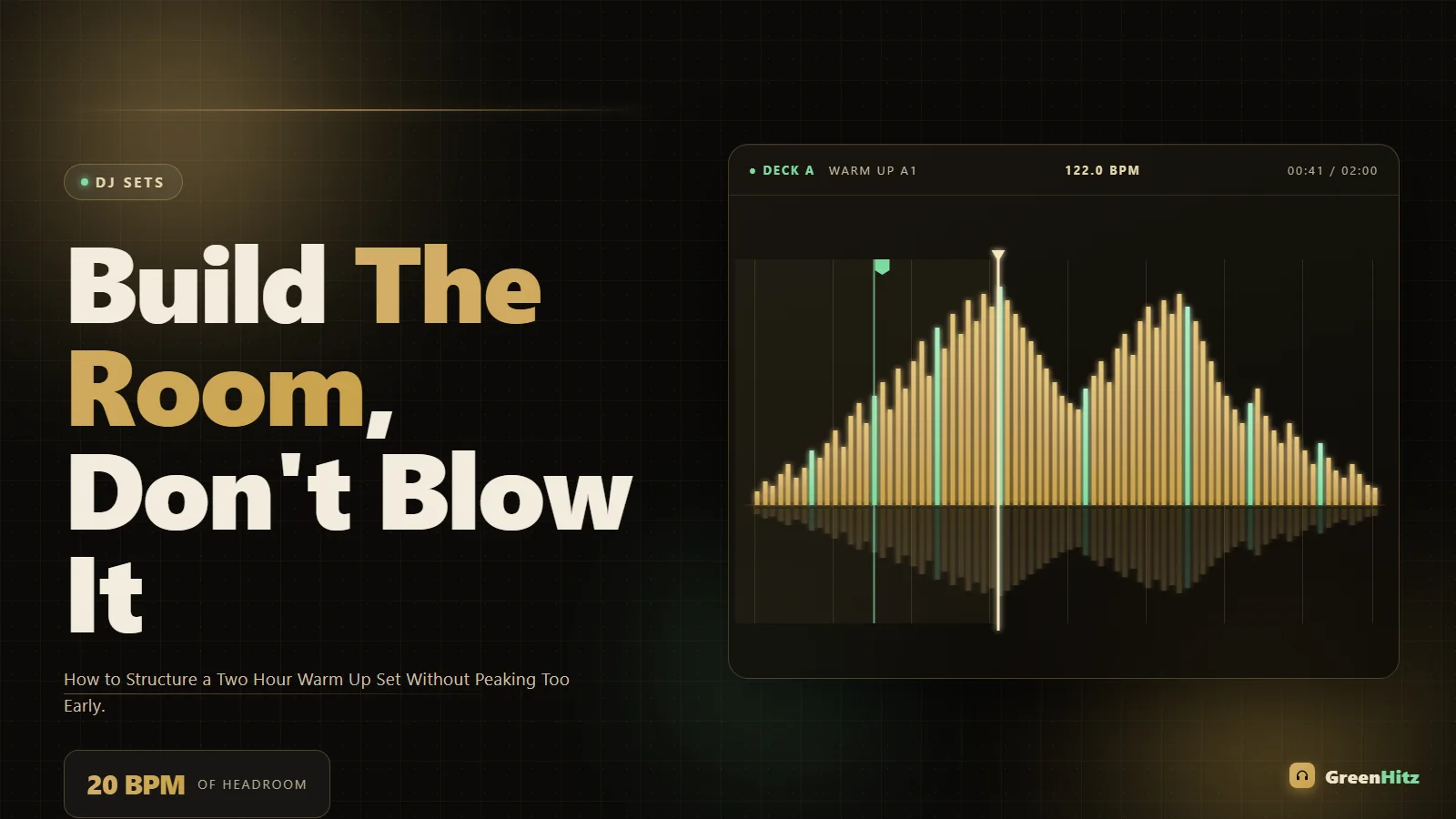
To structure a warm up DJ set, start 20 to 30 BPM below your peak-time tempo, keep the first 40 minutes deep and groovy, and raise energy in three deliberate stages so you land the room hot but not maxed out by the time the headliner takes over. The whole job is restraint: you are building a floor, not blowing it. Play the biggest records too early and you leave the main act with nowhere to go and a crowd that already peaked.
Here is the thing most new DJs get wrong. A warm up is not a shorter version of a peak-time set. It is a completely different assignment with different tools, different track selection and a different definition of success. Nail it and promoters remember you. Below is a two hour blueprint you can adapt to house, tech house, open format, or anything with a pulse.
What a warm up set is actually for
Your job is to take an empty or half-empty room and hand the next DJ a warm, moving, thirsty crowd. That means:
- Setting the sonic identity of the night. If the headliner plays deep, driving house, you should not open with commercial pop edits. You establish the lane.
- Building energy gradually so there is a clear arc from door-open to peak.
- Leaving headroom. Both in BPM and in the size of the records you play. The best warm up DJs hold back their biggest weapons on purpose.
Success is not the crowd screaming at minute 30. Success is a full dance floor with room to climb. If people are already exhausted when the main act drops in, you did the job wrong even if it felt great in the moment.
The two hour warm up structure, broken into four phases
Think in phases, not individual tracks. Here is how I split a 120 minute opening slot. Adjust the tempos to your genre, but keep the shape.
| Phase | Time | Energy | BPM guide (house) | Goal |
|---|---|---|---|---|
| 1. Room setting | 0:00 to 0:40 | 2 to 3 of 10 | 118 to 122 | Atmosphere, first arrivals dancing |
| 2. Groove build | 0:40 to 1:15 | 4 to 5 of 10 | 122 to 124 | Fill the floor, lock the groove |
| 3. Lift | 1:15 to 1:45 | 6 to 7 of 10 | 124 to 126 | Raise energy, hint at the peak |
| 4. Handover | 1:45 to 2:00 | 7 of 10, holding | 126 | Hot room, headroom intact |
Phase 1: Room setting (first 40 minutes)
Doors just opened. The room is thin. Resist every urge to force it. Play deep, textured, groovy records with space in them. Dub house, deep house, warm disco edits, slower Afro-leaning grooves. Long blends, no drama. You are creating a mood people want to walk into, not demanding they dance.
Keep the tempo low and stable. Vocals should be atmospheric, not anthemic. This is where you build trust with the room and let the early crowd settle in with a drink before they commit to the floor.
Phase 2: Groove build (40 to 75 minutes)
Now the room is filling. Nudge the BPM up two or three beats and introduce more percussive, rolling records. This is the pocket where a warm up lives: undeniable groove, steady four-on-the-floor, basslines that make people nod before they even realize they are moving. Bring in the odd recognizable element (a familiar sample, a loved but not overplayed vocal) to reward the crowd without cashing in your big cards.
Reading the room matters more here than anywhere. If you are unsure how to read energy signals, my guide on reading a dance floor and knowing when to drop what breaks down the tells to watch for.
Phase 3: Lift (75 to 105 minutes)
The floor is busy. Time to climb, but climb in a straight line, no spikes. Slightly higher BPM, more energy in the drums, brighter synths, a few bigger drops. You want people committed and sweating. Crucially, you are hinting at the peak without arriving at it. Think of it as showing the crowd the door to the big room without walking them through it.
Phase 4: Handover (105 to 120 minutes)
The last 15 minutes are about presentation. Get the room hot and hold it there. Do not launch your absolute biggest bomb: leave the ceiling for the headliner. End on a strong, driving record with clean mix-out points so the next DJ can grab the energy and run. A clean handover is a professional courtesy that gets you rebooked.
BPM and energy control: the levers you actually pull
Energy is not only BPM. You control the arc with several dials at once:
- Tempo. Your headline number, but move it gradually. A 20 BPM jump across two hours is smooth. A 10 BPM jump in one transition is a cliff.
- Track density. Sparse arrangements feel calmer than busy, layered ones even at the same tempo.
- Vocals. Big topline vocals raise perceived energy fast. Save the sing-alongs for later phases.
- Bass weight. Deep sub grooves feel hypnotic. Punchy, aggressive bass feels urgent.
- Mix length. Long 32 bar blends feel relaxed. Quick cuts feel energetic. Match your mixing style to the phase.
Keeping your transitions smooth as you climb is where clean beatmatching earns its keep. If you are still tightening that up, revisit the fundamentals in our step-by-step guide to beatmatching by ear.
Track selection: hold your bombs back
The single biggest warm up mistake is emotional. You have a killer record, the room is warming up, and you want the reaction. Do not. Every anthem you burn early is a peak you steal from the headliner and a place you cannot go later yourself.
Build a warm up crate that is intentionally one notch below your peak crate. Deeper cuts, groovier tools, longer intros and outros, records that reward the floor without demanding a screaming response. Keeping a separate crate for opening sets is exactly the kind of prep that pays off, and it is easier when your library is tidy. Our walkthrough on organizing your Serato library with smart crates shows how to build energy-based crates you can trust on the fly.
This is also where a record pool earns its subscription. Pulling clean, DJ-ready intros, extended mixes and dub versions saves hours, and having extended edits with long mix-friendly intros is gold for a warm up. GreenHitz is built around exactly that kind of DJ-ready sourcing, so you can stock a warm up crate with groove tools without spending your week hunting edits.
Harmonic mixing keeps a warm up feeling seamless
When you are blending long and playing deep, clashing keys stick out fast because there is nothing loud to hide behind. Mixing in key keeps those slow, exposed transitions buttery. If you have not worked key mixing into your flow yet, our breakdown of mixing harmonically with the Camelot wheel is the fastest way to start. Even loosely staying within neighboring keys during Phases 1 and 2 makes your set sound more considered.
Adapting the blueprint to the gig
Two hours in a house club is one scenario. Here is how to bend the structure:
- Open format bars and lounges. Slower ramp, wider genre net, more familiarity earlier. The same restraint applies. See our take on open-format mixing across hip-hop, house and Afrobeats for genre-bridging moves.
- Festival or early main-stage slot. Crowd may already be energetic on arrival. Start a touch higher but still leave clear headroom for the acts after you.
- Weddings and private events. Warm ups here are about background-to-foreground transitions, not BPM climbs.
- Very slow rooms. If nobody is dancing by Phase 2, do not panic-drop an anthem. Hold the groove, thin your mixes, and trust the build.
Common warm up mistakes that peak the room too early
- Starting too fast. Opening at 126 leaves you nowhere to climb.
- Playing your biggest records first. Reaction now, dead room later.
- Trying to be the headliner. Ego kills warm ups. Serve the night.
- Ignoring the arc. Random energy jumps confuse a floor.
- Sloppy handover. Ending cold or overcooked burns your rebook chances. Handing over well is part of building the reputation covered in our guide to building a DJ brand promoters trust.
Want more sets, gear and prep breakdowns like this one? Browse the rest of the GreenHitz DJ guides, and if you need a steady supply of clean, mix-ready tracks to fill those warm up crates, start at the GreenHitz record pool.
Frequently Asked Questions
What BPM should you start a warm up set at?
Start roughly 15 to 25 BPM below the night's peak tempo. For a house club peaking around 126 to 128, open around 118 to 122. The exact number matters less than leaving a clear climb, so you have room to raise energy across the whole set instead of maxing out in the first half hour.
How long should a warm up DJ set be?
Warm up slots usually run 90 minutes to two hours, though bar and lounge openers can go longer. Whatever the length, structure it in phases rather than counting tracks. A two hour set gives you the ideal runway for a slow, deliberate build across room-setting, groove, lift and handover phases.
Should a warm up DJ play well-known tracks?
Sparingly. Familiar records reward the crowd, but save the certified anthems for peak time. In a warm up, lean on recognizable samples, loved album cuts and groovier versions rather than the obvious floor-fillers. If you spend your biggest tracks early, both you and the headliner are left with nowhere to go.
How do I hand over to the next DJ smoothly?
End on a strong, driving record with a clean, predictable outro and clear mix-out points. Keep the room hot but not maxed. Talk to the incoming DJ about their opening BPM if you can, so your final track sits close to their first. A tidy handover is what gets you booked again.
What if the dance floor is still empty during my warm up?
Do not panic and drop a huge record to force a reaction. Empty early floors are normal. Hold your groove, keep mixes long and hypnotic, and trust the build. People arrive and commit gradually. Reacting to an empty room by peaking early usually leaves you exhausted with nothing left when the crowd finally shows.
Is a warm up set easier than playing peak time?
No, it is often harder. Peak time rewards energy and big records. A warm up demands patience, restraint and precise reading of a sparse room, with no anthems to bail you out. Many experienced DJs consider the opening slot the truest test of taste and dance floor control.


