
How Do Record Pools Work for DJs and Artists?
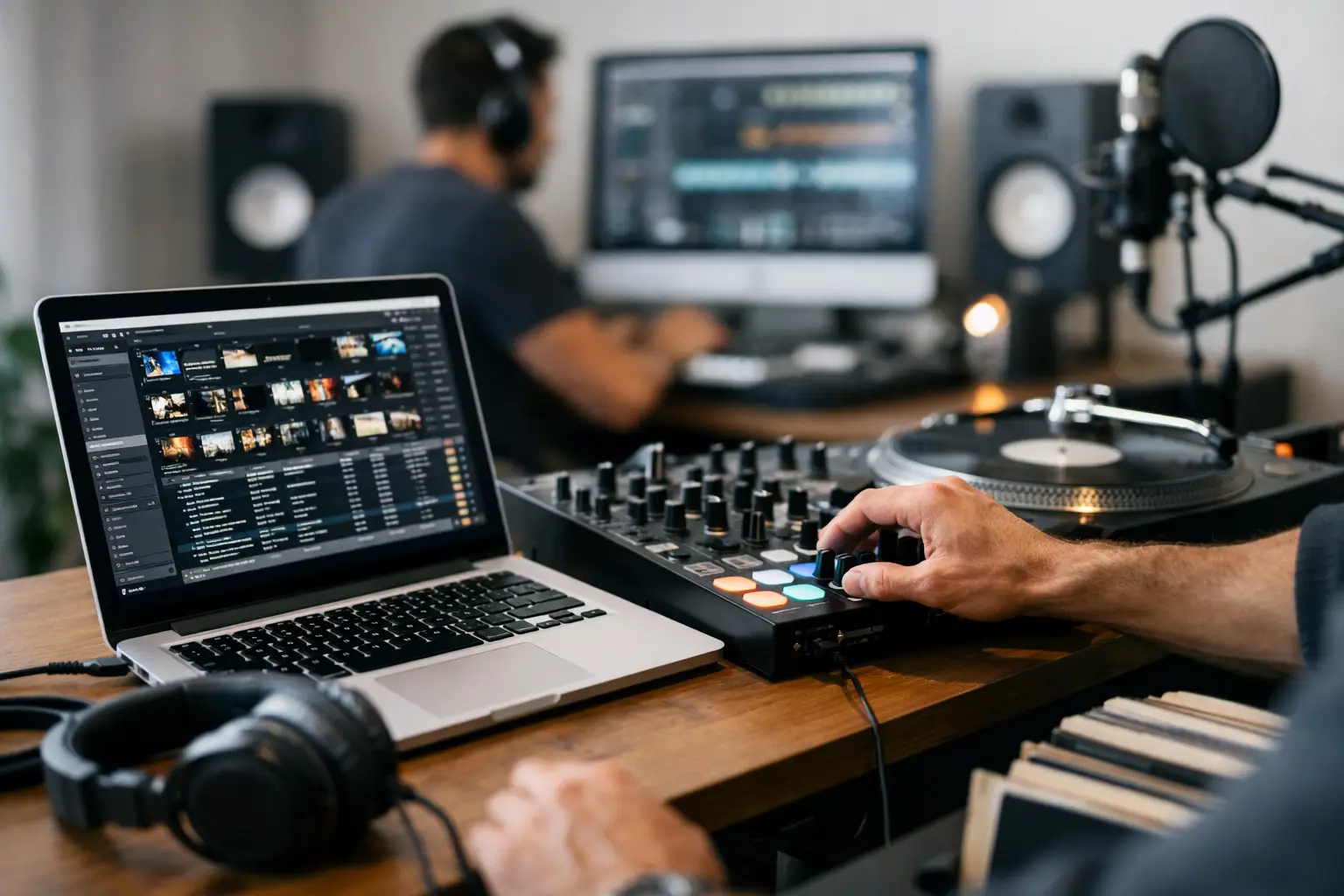
If you have ever grabbed a clean intro edit before a weekend set or tried to get a new release into the hands of DJs who actually play out, you have already brushed up against the real answer to how do record pools work. A record pool is not just a download site. It is a structured exchange between music promoters and working DJs, built around access, organization, and feedback.
That matters because both sides have a job to do. DJs need fresh music that is usable right now, not random files with bad metadata and no context. Artists and labels need more than passive exposure. They need their records heard, downloaded, rated, and played by people with influence on dancefloors, radio, and local scenes.
How do record pools work in practice?
At the basic level, a record pool collects promotional music from artists, labels, and promo teams, then makes that music available to approved DJs. The pool sits in the middle and handles the workflow: uploads, formatting, catalog organization, discovery, and performance signals like downloads, ratings, likes, and written feedback.
For DJs, the experience is about speed and usability. Instead of chasing promos across emails, DMs, and scattered file folders, they log in to one platform and search by genre, release date, BPM, key, or version type. If the pool is built well, the tracks are crate-ready. That means clean metadata, playable audio quality, and useful versions like intro, extended, acapella, clean, or dirty.
For artists and labels, the record pool acts like a direct channel to DJs who are active, not just signed up. That distinction is huge. A big mailing list looks nice on paper, but if nobody is downloading, rating, or testing records in sets, it is mostly noise. A strong pool gives promoters measurable engagement from DJs with real-world use cases.
What DJs actually get from a record pool
The old-school idea of a pool still holds up: give qualified DJs early access to music so they can break records in the market. The difference now is that digital record pools move faster and track more data.
A DJ joins, gets approved if the platform screens for legitimacy, and starts browsing releases. They can search by style, which matters if you play open-format one night and house or hip-hop the next. They can also filter by utility. A mobile DJ may need clean edits and fast intros. A club DJ may want extended mixes. A radio DJ may need radio edits and instrumentals. Good pools understand that the same song often needs multiple working versions.
That is why record pools are valuable beyond simple access. They save prep time. If a file already includes BPM and key data, naming is consistent, and the right edit is there, the DJ spends less time cleaning up the library and more time building sets.
There is also a discovery angle. DJs do not just want what is already everywhere. They want records early enough to test, react, and shape a crowd before a track gets oversaturated. Record pools can create that early lane, especially when new releases are organized well and promoted to the right audience.
What artists and labels get from a record pool
From the artist side, the core value is targeted DJ promotion. Instead of blasting a release into the void, they upload it into a system where DJs are there specifically to find playable music.
That changes the quality of exposure. A stream on a consumer platform tells you somebody pressed play. A record pool interaction can tell you more useful things: who downloaded the track, which version they chose, whether they liked it, how they rated it, and sometimes whether they left comments that can shape the next promo push.
This is especially useful for dance, hip-hop, Latin, and open-format releases where DJ support can move records in clubs, on mix shows, and through local scene credibility. If a track starts landing in the crates of working DJs, it gains a different kind of traction than a simple playlist add.
Some pools also offer promoted placement or direct email blasts to push a release harder. That can help when you need visibility around a launch, but there is a trade-off. Promoted placement can increase exposure, but the music still has to connect. If the record is not playable or the package is weak, visibility alone will not create support.
How the workflow usually moves from upload to play out
A typical record pool workflow starts with the artist, label, or promo team uploading a release. They add artwork, metadata, genre tags, and the right versions. If they know what DJs need, they do not upload one random master and call it done. They provide useful variants that fit actual performance situations.
Once the release is live, DJs discover it through browsing, search, featured placement, or email promotion. Then the key actions start: downloads, likes, ratings, and feedback. Those signals help artists understand what is landing and help the platform surface releases that are getting traction.
The strongest pools create a loop, not a one-way drop. DJs get access to fresh music. Artists get response data. The platform becomes more useful as more high-quality releases and more active DJs participate.
That two-sided model is why platforms like GreenHitz have staying power. When DJs can consistently find crate-ready music and artists can track real DJ engagement, the pool becomes part of the release workflow, not just a side channel.
Not all record pools work the same way
This is where people get tripped up. They hear “record pool” and assume every platform offers the same thing. Not even close.
Some pools are broad and try to cover every genre with mixed quality control. Some are more specialized and better for specific scenes. Some focus heavily on edits and remixes for DJs. Others are more promo-driven and built to connect labels and artists with tastemakers. The right fit depends on what you need.
If you are a DJ, look at the quality of the library, version availability, metadata, genre coverage, and how active the community really is. A huge catalog means less if half the files are outdated, mislabeled, or not built for live use.
If you are an artist or label, pay attention to whether the DJs are actually working, whether analytics are meaningful, and whether the platform supports promotion beyond basic storage. You want a place where your record can be seen by DJs who might play it, not just sit in an archive.
What makes a good record pool worth using
A good record pool respects the reality of DJ workflow. Files should be organized, downloadable, and ready for performance. Search should be fast. Genre tagging should make sense. Versioning should reflect actual demand. If you have to fix every file before loading it into your software, the pool is not doing its job.
From the promo side, a good pool also respects the reality of release marketing. Artists need more than a digital shelf. They need positioning, discoverability, and feedback they can act on. Download counts alone are useful, but better data helps answer the real questions: Are DJs responding? Which markets or styles are moving? Is the clean version outperforming the dirty version? Is the record getting support from open-format DJs or genre specialists?
There is also a credibility factor. DJs trust pools that consistently deliver quality and relevance. Artists trust pools that can get records in front of DJs who matter. That trust is earned over time through curation, platform mechanics, and actual community activity.
The limits of record pools
Record pools are powerful, but they are not magic.
For DJs, a pool will not replace taste. Access to more music does not automatically mean better sets. You still need selection skills, timing, and an understanding of what works in your rooms.
For artists, pool placement does not guarantee club play, radio support, or breakout momentum. If the record is not right for the market, or if the promo assets are weak, the response will reflect that. A record pool can put a release in front of the right people. It cannot force a reaction.
That is why the best approach is practical. Use a pool as one part of a larger system. DJs use it to stay current and organized. Artists use it to build targeted DJ support and collect actionable signals. The value comes from fit, consistency, and quality of execution.
If you are asking how do record pools work, the short answer is this: they connect playable music with people who can move it in the real world. The better the pool, the less friction there is between upload, discovery, and play out - and that is exactly where promotion starts turning into traction.


